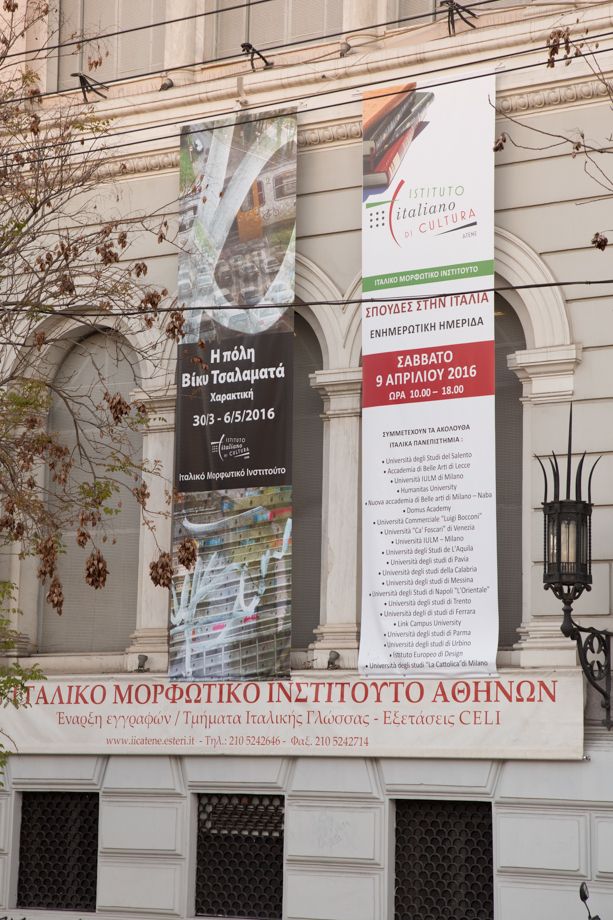
THE MATRIX OF THE CITY
The city is a matrix. It is perpetually composed by the images that evolve from within. Deeply hidden representations within the stories we carry in our imagination. Representations we consider to be on its surface, which constantly change with that exhaustive speed characteristic to contractors of ephemeral market profits exchanging
the values for ephemeral, market relationships.
The city has its own, plastic language, projected on its body, which can never be obliterated, no matter how much concrete you cast on it. He who attempts to read it, with that guileless curiosity of a stranger
or of a small child can only comprehend it. He who is able of being surprised by the beauty discovered on an unknown alley, behind a street corner, a façade, a billboard, expressing his embarrassment facing its injured tissues, decisively following traces from the past and the present, the personal and the collective, can recreate representations from a past powered by his imagination for thefuture, maybe.
Two artists from two different countries, serving two different kinds of art, the Greek visual artist Vicky Tsalamata and the Italian writer Italo Calvino met through their common inner discourse and their
eclectic, cognate morphological pursuits in the small and the big field of creation. The city- the oneiric, dreamy city and the real one- is their common matrix. They carve the city’s faces in it, working from the inside to the outside and vice versa.
In the beginning there is the imperceptible detail which is easily overlooked or ignored in the daily rush. This is the point where they both start their narrative from and they build a structure consisting
of small elliptical forms, accompanied by tremendous accuracy and skill. They synthesize a collage of broken fragments, frame by frame, according to the modernism’s principles which exudes depending on
the features projected, the aura of each place either in a realistic or a surrealistic manner.
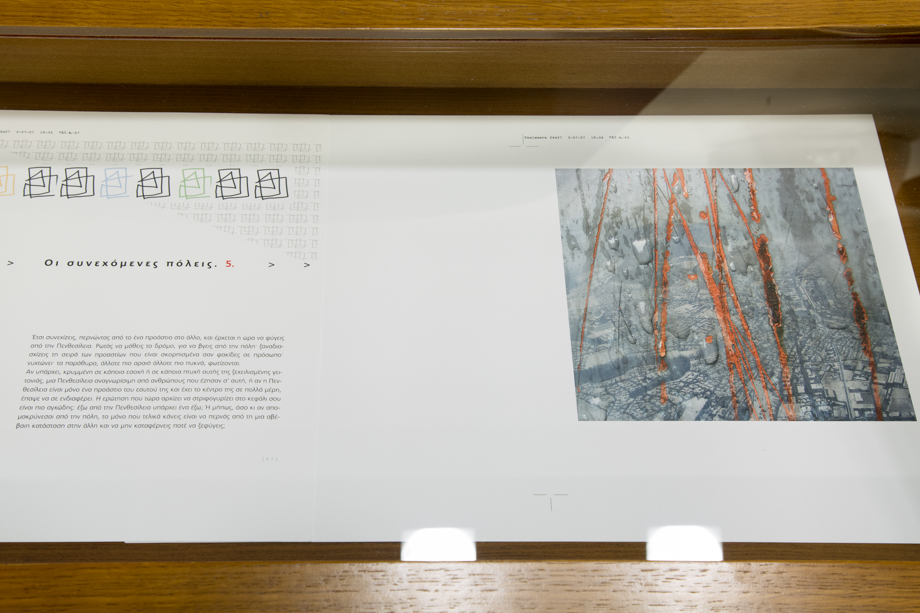
Calvino gives us a tour of his fictional work “Invisible Cities” from 1972 which made him world famous, describing Venetian merchant Marco Polo, Kublai Khan’s ambassador’s travels in order to inform him about what was happening in his vast kingdom. Descriptions of imaginary cities and dialogues between the two heroes reveals to us the author’s questioning upon the modern city as a reflection of our self
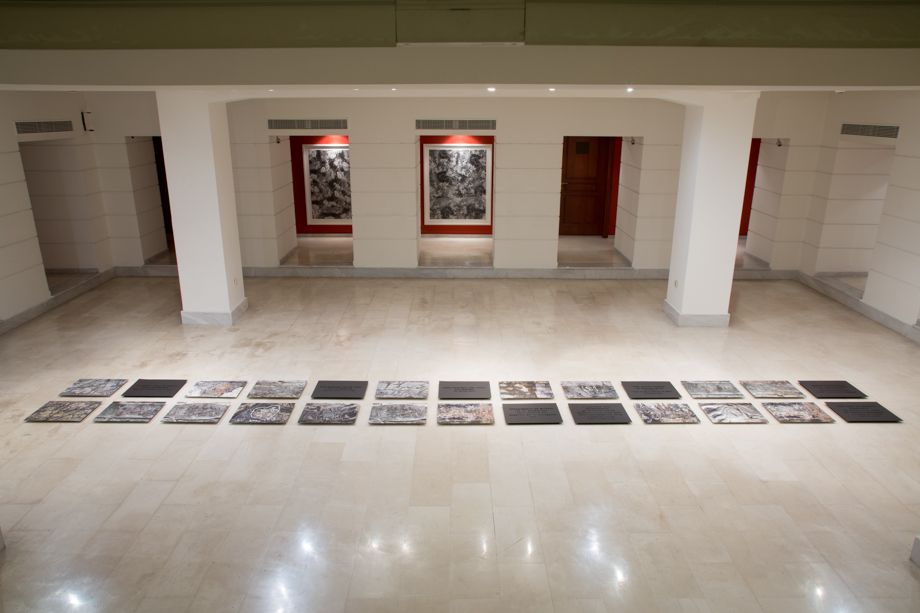
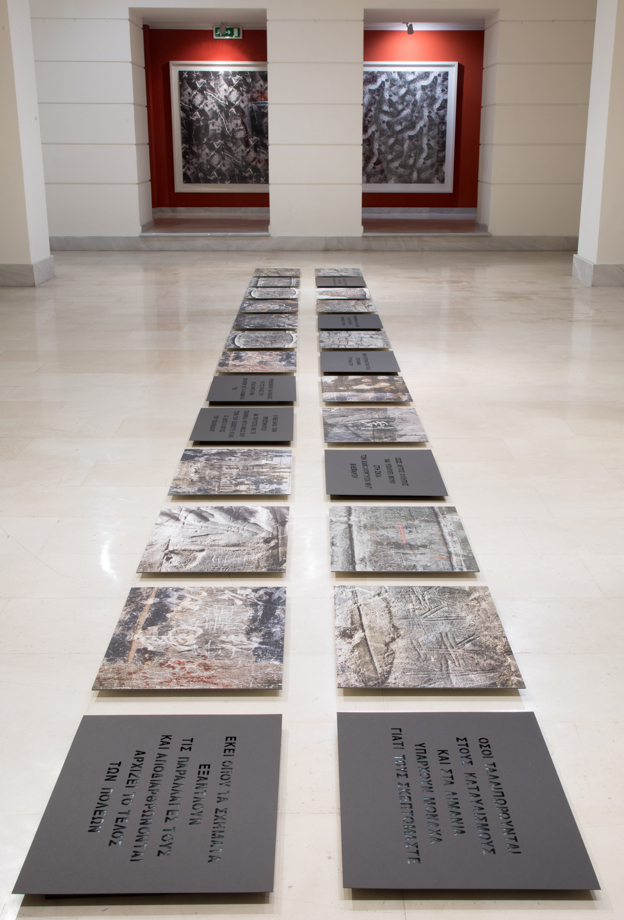
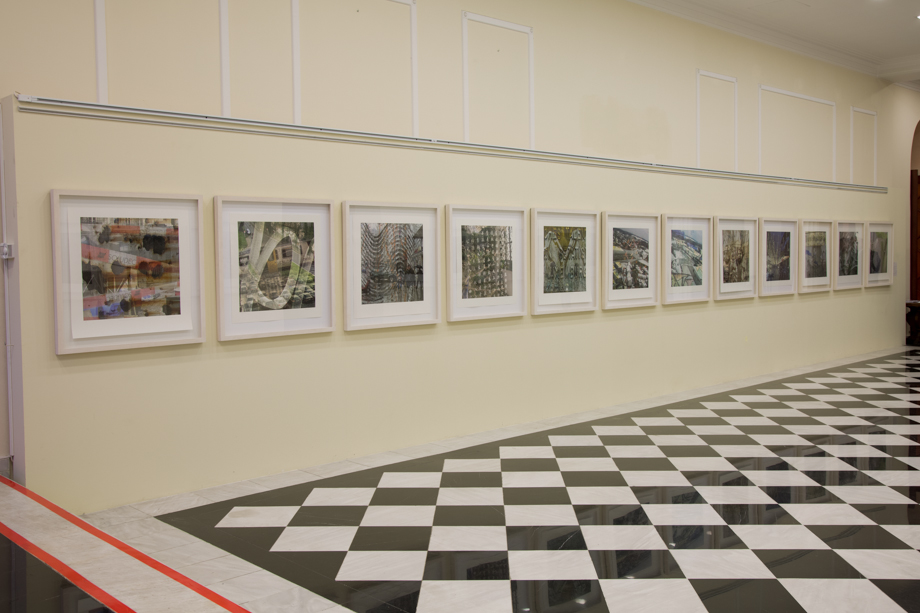
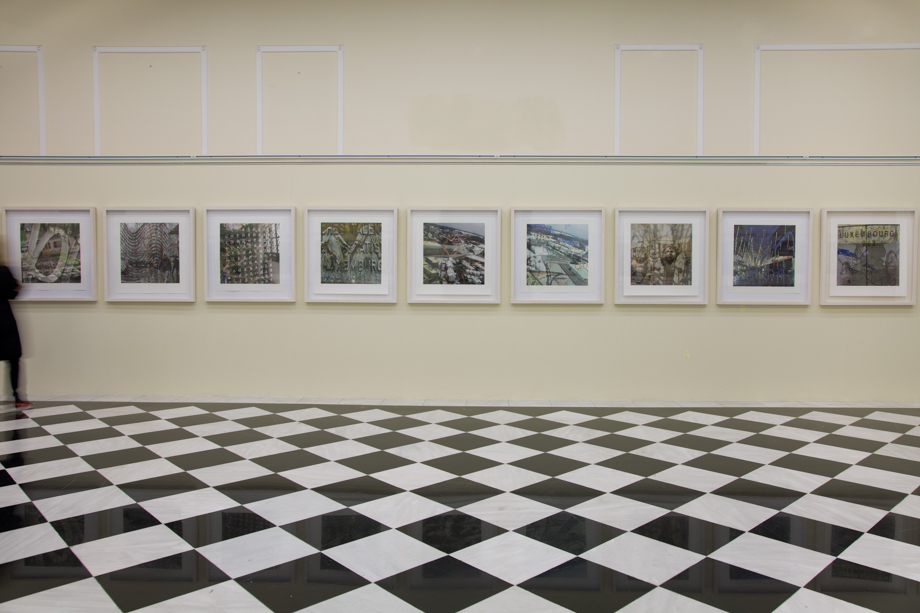
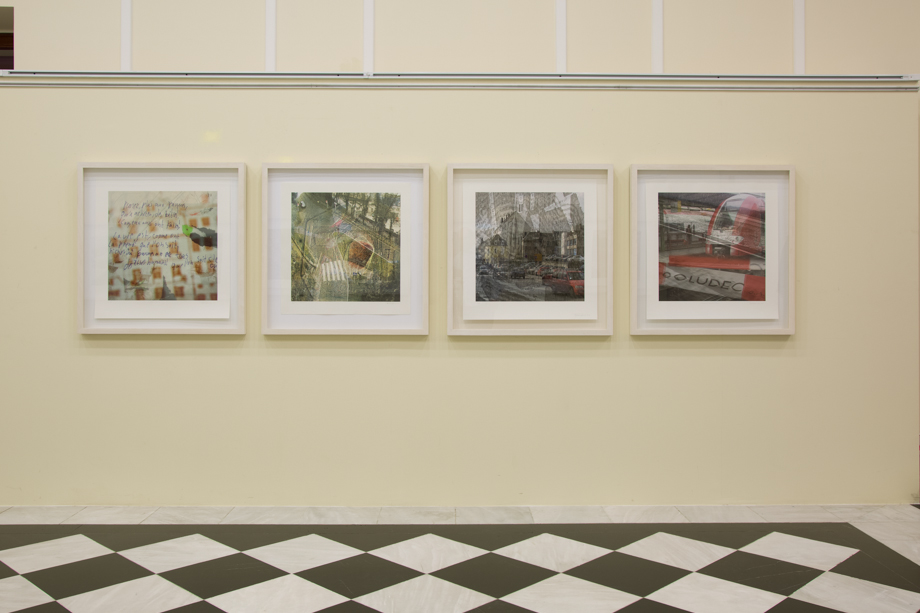
Tsalamata’s photographic lens capture snapshots of unknown cities she visits as a traveler: Chicago, Beijing, Pompeii, Luxembourg, Rome. The artist
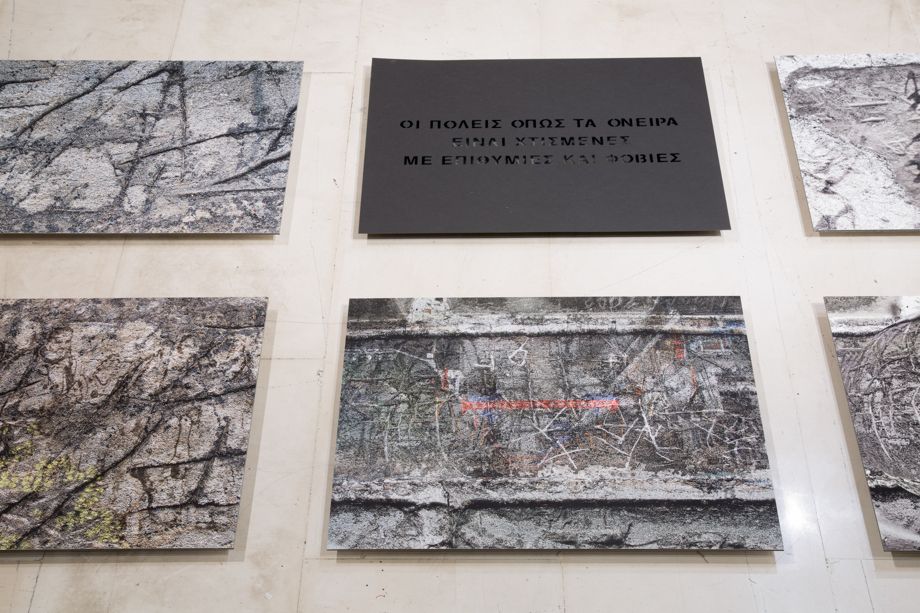
captures distorted by time graffiti, congested vehicles, trains, street signs and commercial glass arcades in a landscape that is impressionistic, expressionistic, futuristic and fleeting at the same
time, which we watch through a hazy screen of both real and imaginary elements. Each moment can be dissolved in a glimpse of our mind. She leads us to the oxidations that disrupt the city’s foundations,
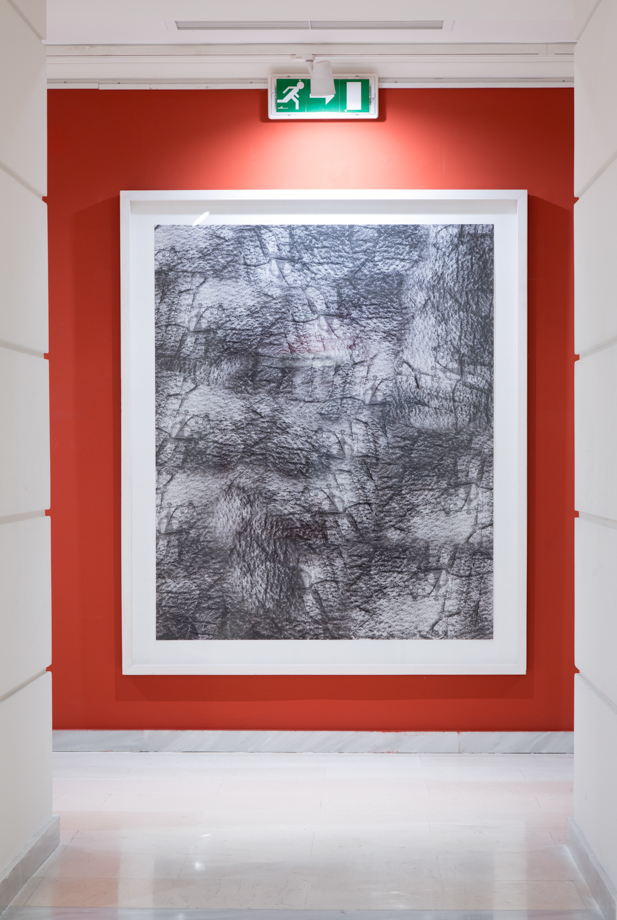
printing its viscera in bas-relief prints on land maps and floor plans that reveal its complex and multidimensional character. This puts a spotlight on the very core of the authentic artistic testimony
as a “place of manifestation of the spiritual experience” that overturns the traditional concept of printmaking art; it sets it free the same way as Calvino does with his literature, setting it free from Durer’s stifling writing and its automatistic use in the art of writing.
Just like Calvino, the artist dives into the deep waters of experimentation. Just like him, she faces the city as if it was a dream which has «neither name nor place”, an exciting puzzle where “every single thing hides another thing”. The viewer is converted into an accomplice through his sense of touch in the attempt to solve it.
With her literally radical work, Vicky Tsalamata demonstrates that what really matters is not the sequence of particular techniques, but their inconsistency. “Cinema against story telling “as Walter Benjamin would say. What really matters is not an attempt to bring art to an aestheticism for one more time but the pursuit of bringing to light the “inter-texts” that constitute the truth of our lives.
Leda Kazantzaki, art historian
Translation:Claudia Gavrila
Read more: La citta.pdf